2026 Mazda CX-30 vs. Mazda3 Sport: Same Length, Very Different Vehicles — Here's Why
June 11 2026,
The 2026 Mazda CX-30 and the 2026 Mazda3 Sport occupy similar territory at first glance — both are five-door compact vehicles in roughly the same price range, both use the same engine family, and both offer a turbocharged performance option. But they ask different things of the buyer, and the differences become clear quickly once you're in the weeds on what each one actually is.
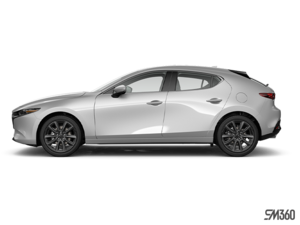
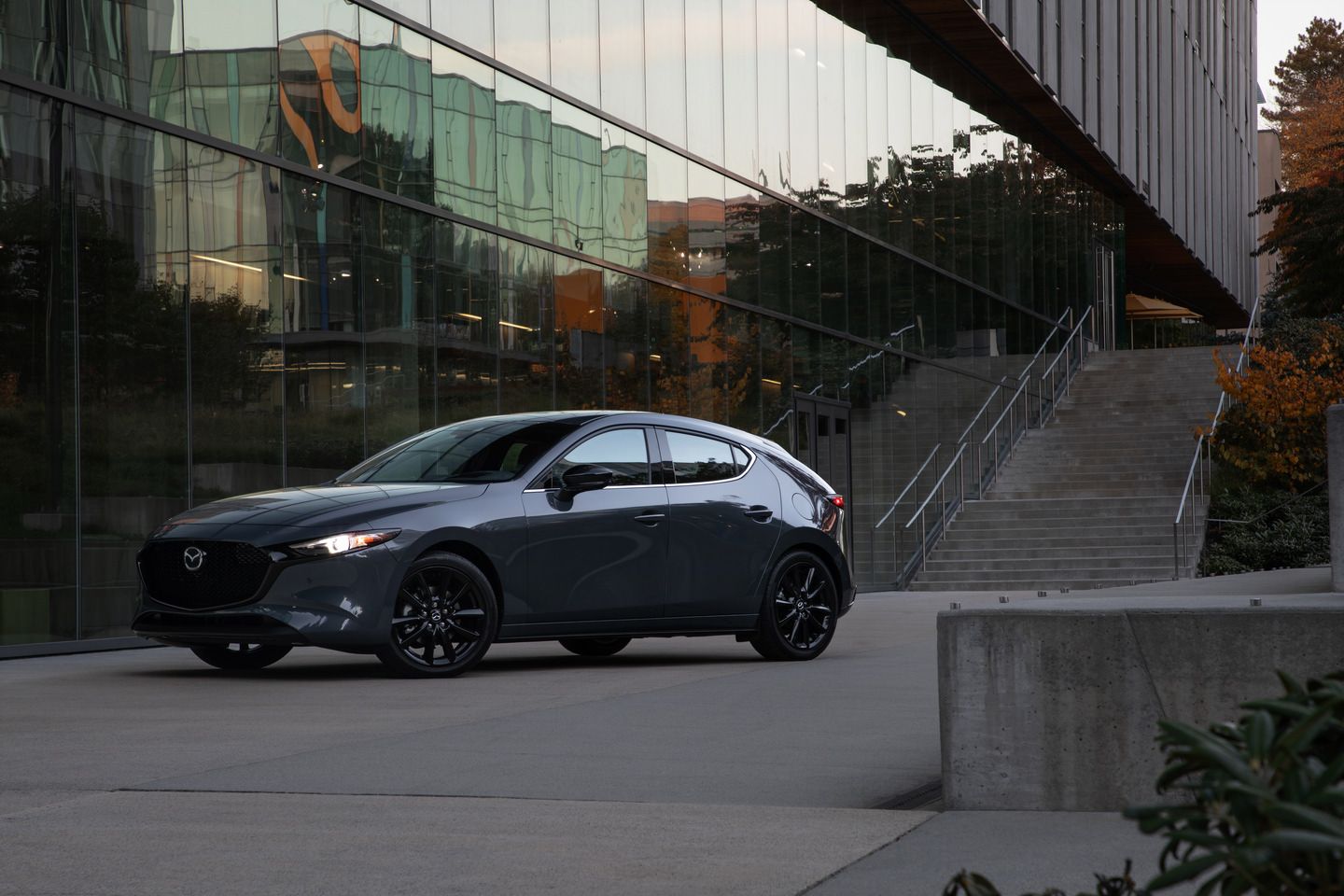
The Mazda3 Sport is a hatchback. The CX-30 is a compact crossover. That distinction drives most of the practical differences between them — and for many buyers, it's the only comparison that matters.
At a Glance: 2026 CX-30 vs. 2026 Mazda3 Sport
|
2026 Mazda CX-30 |
2026 Mazda3 Sport |
|
|---|---|---|
|
Body style |
Compact crossover |
5-door hatchback |
|
Overall length |
4,459 mm |
4,459 mm |
|
Standard engine |
2.5 L I4 NA, 186 hp / 186 lb-ft |
2.5 L I4 NA, 191 hp / 186 lb-ft |
|
Turbo option |
Yes — 250 hp / 320 lb-ft |
Yes — 250 hp / 320 lb-ft |
|
AWD |
Standard on all trims |
FWD standard; AWD available |
|
NRCan combined (NA) |
8.7 L/100 km |
7.9 L/100 km (FWD) |
|
NRCan combined (Turbo AWD) |
9.3 L/100 km |
8.9 L/100 km |
|
Manual transmission |
No |
Yes — GT trim only |
|
Cargo volume (behind rear seats) |
572 L |
569 L |
|
Ground clearance |
Higher — raised ride height |
Lower — car-like stance |
Same Length, Different Stance
Here's the detail that surprises most buyers: the CX-30 and the Mazda3 Sport have exactly the same overall length — 4,459 mm. They share a physical footprint. What differs is everything else about how they sit and how they carry their body.
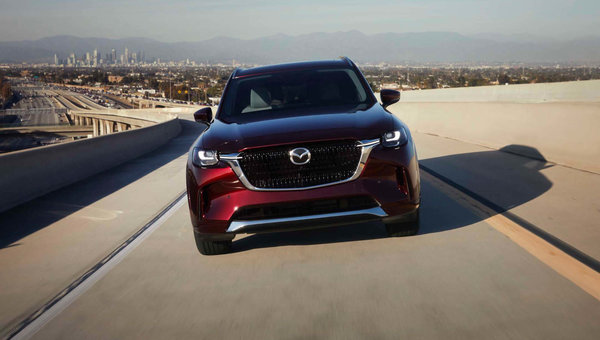
The CX-30 rides higher. It has a raised suspension, more ground clearance, and a taller body that gives it a crossover profile. That higher ride means easier ingress and egress for most passengers, a better sightline from the driver's seat, and more ability to handle light off-road surfaces, gravel, or snowy driveways. The CX-30's taller body does reduce cargo volume below what a flat-floor hatchback delivers in terms of usable loading height, but the tailgate opens wide and the 572 L behind the rear seats provides practical everyday capacity.
The Mazda3 Sport has a lower, more car-like stance. Entry and exit require bending down slightly, visibility from the driver's seat is more conventional for a car, and the feel on the road is closer to a refined compact hatchback than a crossover. For buyers who prefer the driving feel of a car over an SUV, that distinction matters daily.
AWD: Standard vs. Available
The CX-30 has standard i-Activ AWD on every trim — there are no front-wheel-drive configurations in Canada. That's a meaningful advantage in mixed-weather conditions, and it's baked into the base price without any deliberate selection required.
The Mazda3 Sport uses front-wheel drive as standard, with i-Activ AWD available on the GS with Luxury Package and the GT Turbo AWD. If AWD is important to you, the CX-30 delivers it automatically; on the Mazda3 Sport, you need to navigate to the right trim to access it, and the Turbo AWD model is the most direct route to AWD with the turbocharged engine.
Engines: Nearly Identical, Slightly Different Numbers

Both vehicles use a Skyactiv-G 2.5 L four-cylinder as their standard engine, but the output numbers differ slightly. The CX-30 produces 186 hp and 186 lb-ft of torque. The Mazda3 Sport produces 191 hp and 186 lb-ft of torque. The five horsepower difference reflects a different engine calibration — the Mazda3 Sport's engine does not use cylinder deactivation, while the CX-30 does.
Both vehicles offer the Skyactiv-G 2.5 L Turbo engine at the GT and GT Kuro Edition level — producing 250 hp and 320 lb-ft of torque on premium 93-octane fuel (227 hp / 310 lb-ft on regular).
In fuel economy, the Mazda3 Sport has a clear edge: 7.9 L/100 km combined in FWD configuration versus the CX-30's 8.7 L/100 km. The lighter, lower-riding hatchback is more efficient, and that gap compounds over a year of driving.
The Manual Transmission
The Mazda3 Sport GT is the only vehicle in this comparison that offers a six-speed manual transmission. That's exclusive to the Sport body style at the GT trim level, and it's front-wheel drive only. For buyers who specifically want a manual gearbox in a compact vehicle with the Mazda3's full technology suite, this is the path.
The CX-30 is automatic-only across every trim.
Cargo and Practicality
The CX-30's 572 L of cargo space behind the rear seats, combined with the flat-fold rear bench, gives it useful everyday cargo-carrying ability. The higher tailgate aperture makes loading boxes and bags comfortable without stooping.
The Mazda3 Sport's hatchback format gives the rear cargo floor a low, car-adjacent loading height. The tailgate opens to a wider angle, and with rear seats folded, the Sport creates a long, flat load floor well-suited for longer items that wouldn't fit upright in a conventional trunk. Cargo volume in litres for the 2026 Mazda3 Sport — confirm current figures with the team at the dealership.
Which One Fits Your Priorities?
|
If you prioritize... |
Choose the... |
|---|---|
|
Standard AWD without extra thought |
CX-30 |
|
Higher ride height and easier ingress |
CX-30 |
|
Best fuel economy in the segment |
Mazda3 Sport (FWD) |
|
Manual transmission option |
Mazda3 Sport GT |
|
Car-like driving feel |
Mazda3 Sport |
|
Off-road or gravel capability |
CX-30 |
Compare Both in Person at Woodstock Mazda
The 2026 CX-30 and Mazda3 Sport are close enough in footprint that the differences only fully register when you sit in each one. To go through both models side by side, stop in at Woodstock Mazda in Woodstock and the team can help you sort out which direction fits your driving.